
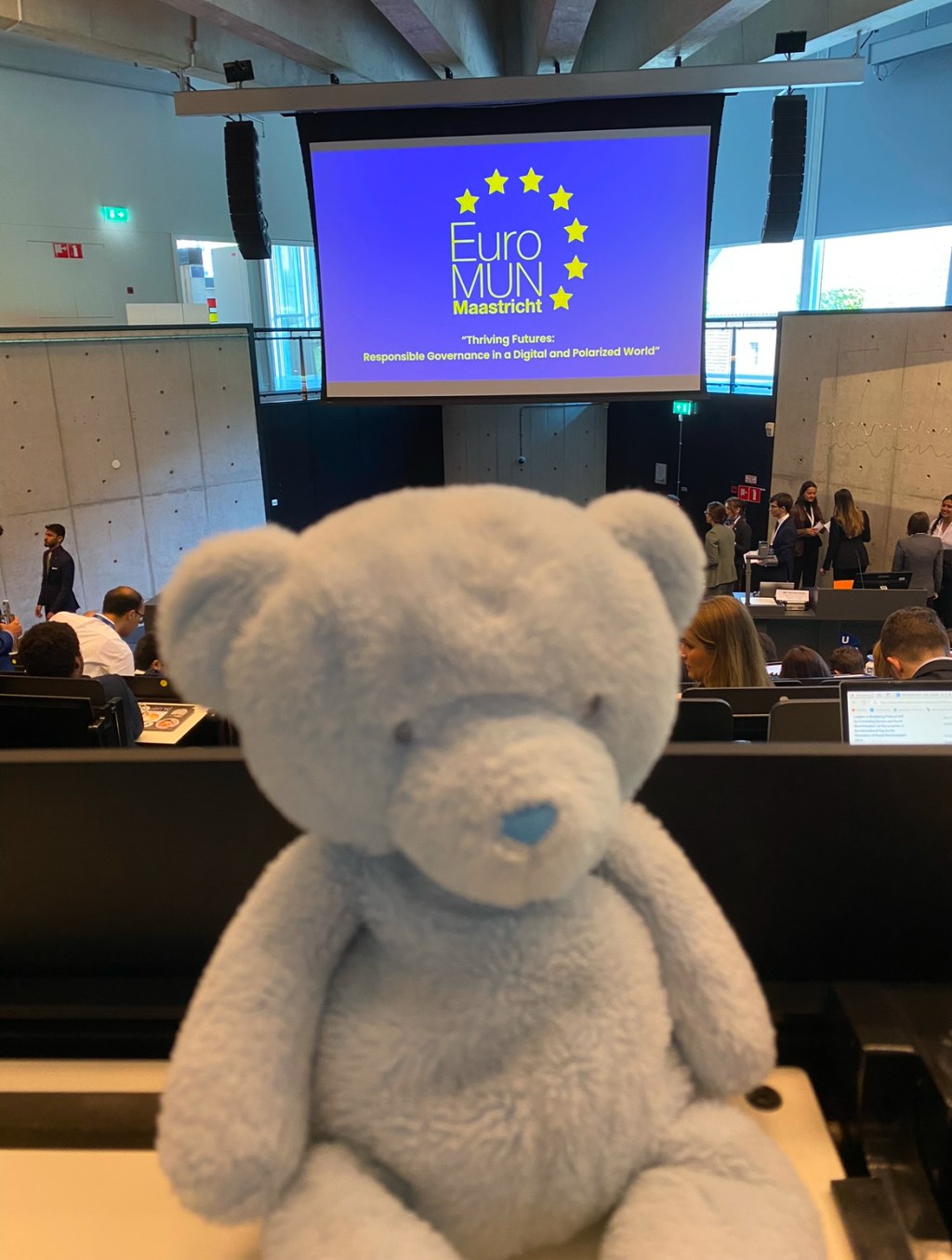
In May of 2024 we went to the EuroMUN in Maastricht. Even though we weren’t a “real” delegation with only 2 people, we still had a lovely conference and met a lot of new people!
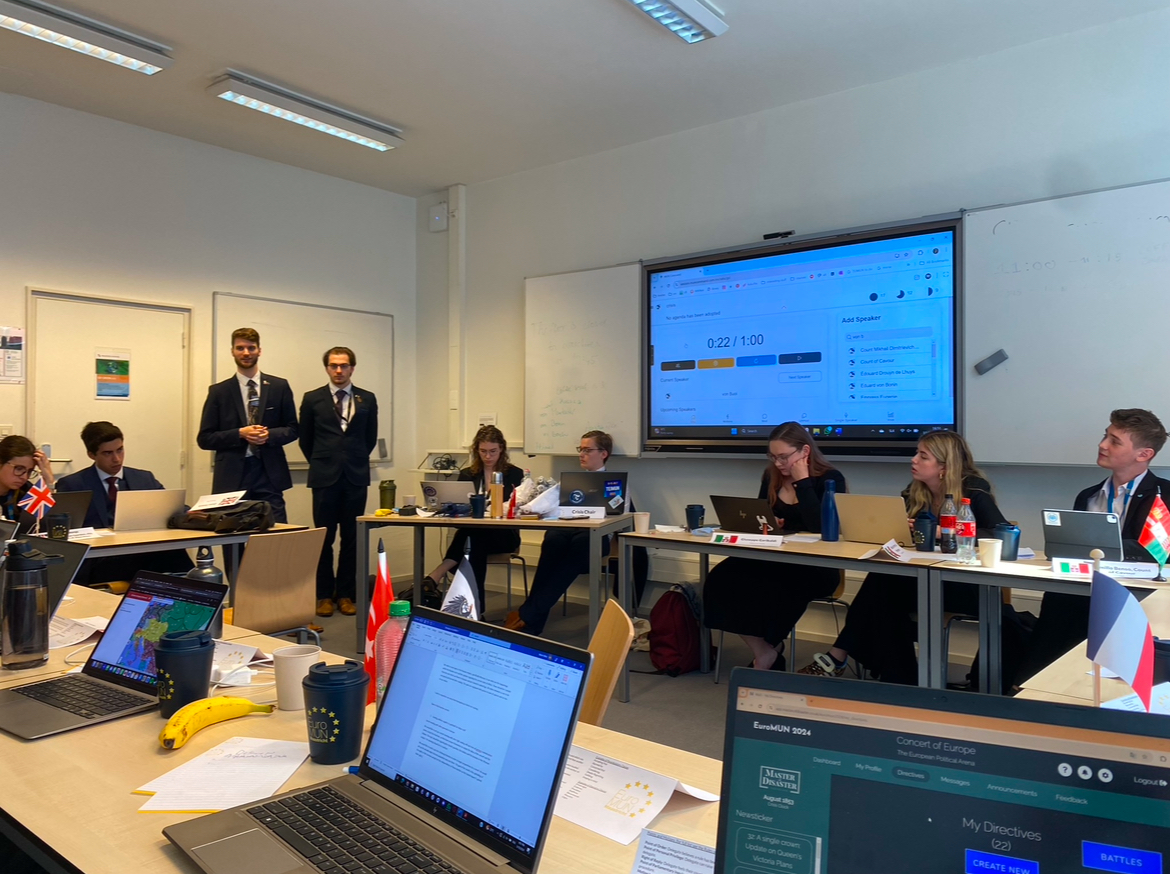
While Chiara was in the NATO committee, I attended the historical crisis committee aka the “Concert of Europe” in 1852. For everyone unsure if he or she should try out crisis, I believe my experience in this committee can give you a good overview of what you can expect from a historic crisis committee. For a general explanation about what crisis is, read the article by Maik here:
“You should forget everything you know about normal MUN” was the first thing the head of the backroom said to us on the first day of debate. And right he was!
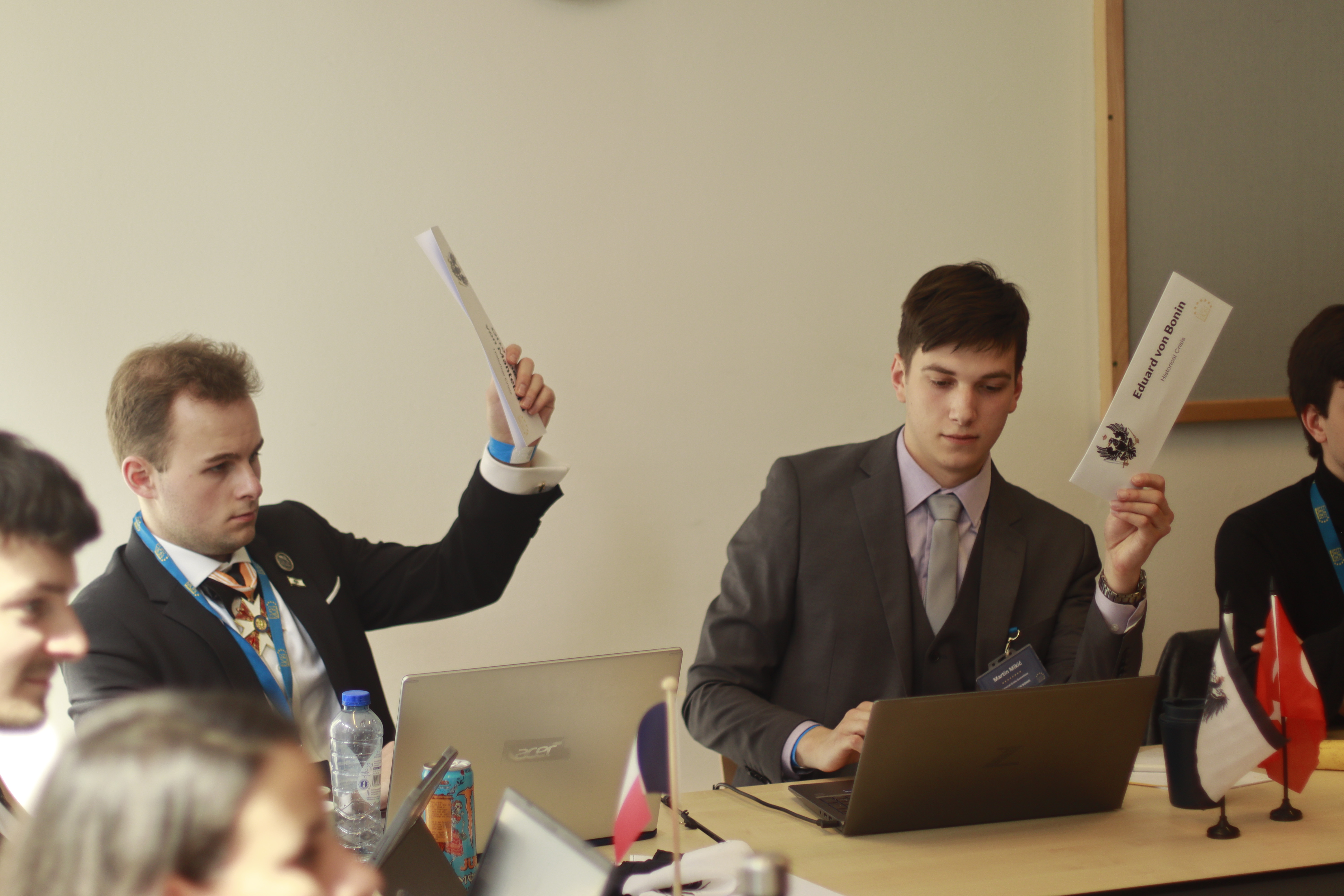
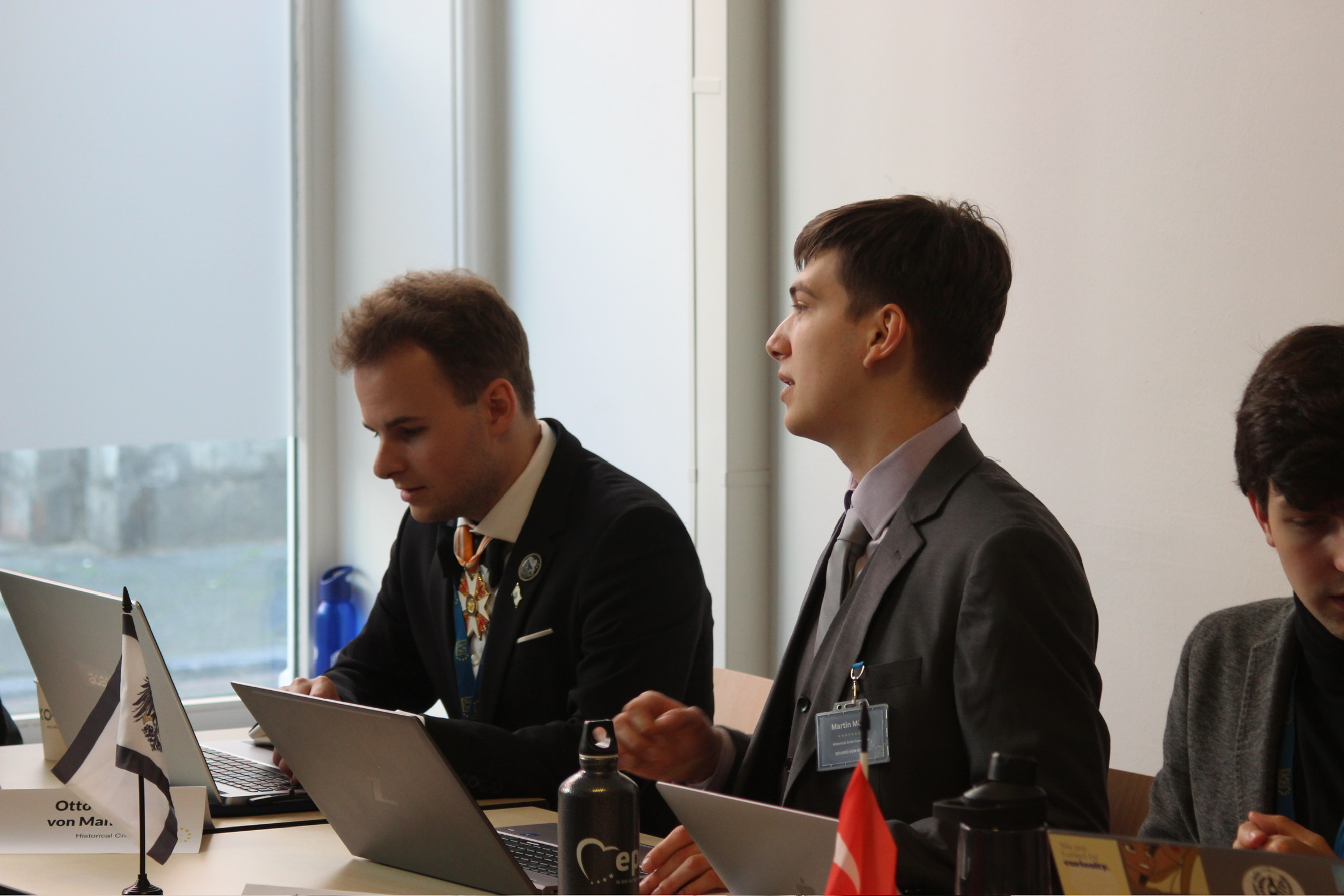
In crisis you represent a person rather than a whole country and you often have multiple people representing the same country or side. In my case, I had the honour to become Otto Theodor von Manteuffel, the Prussian Ministerpräsident for four days with likes of Garibaldi, Queen Victoria and the Count of Cavour filling our ranks.
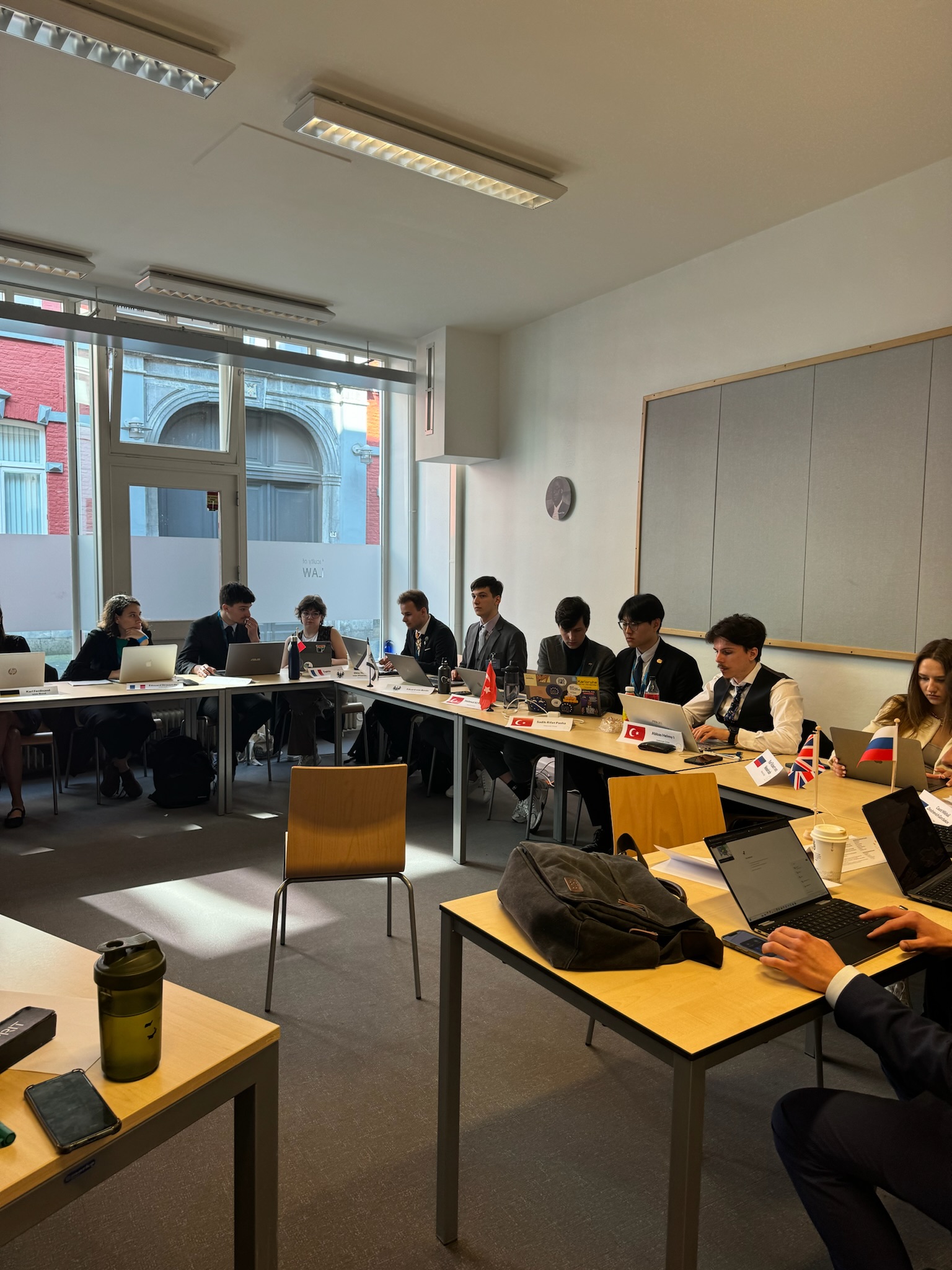
Normally the committee is split into two opposing cabinets but in this case they left us in one room so we could determine our foreign policies ourselves when the inevitable events that lead to the Crimean War would trigger a European conflict. This however didn’t happen at first and history was rewritten considerably.
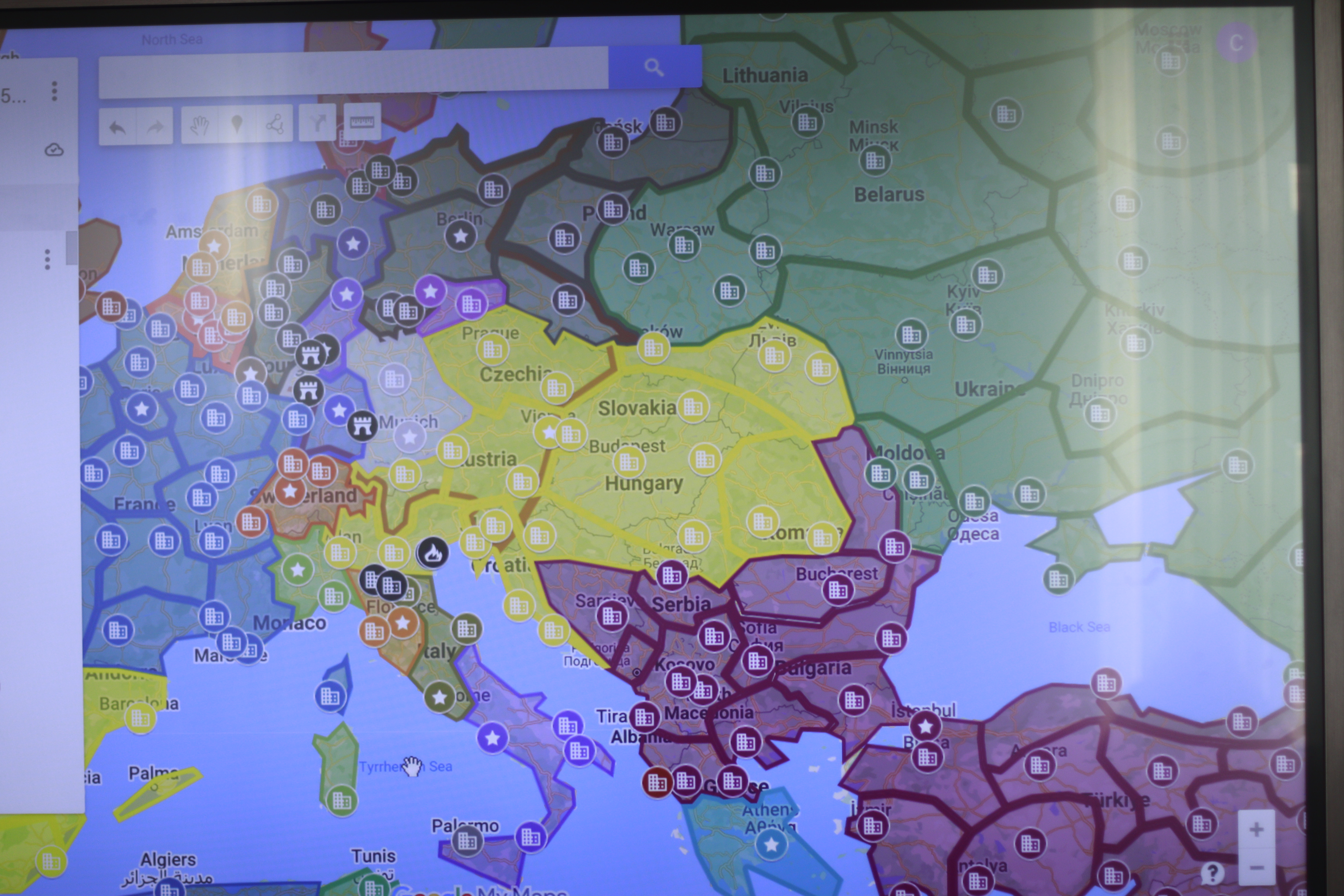
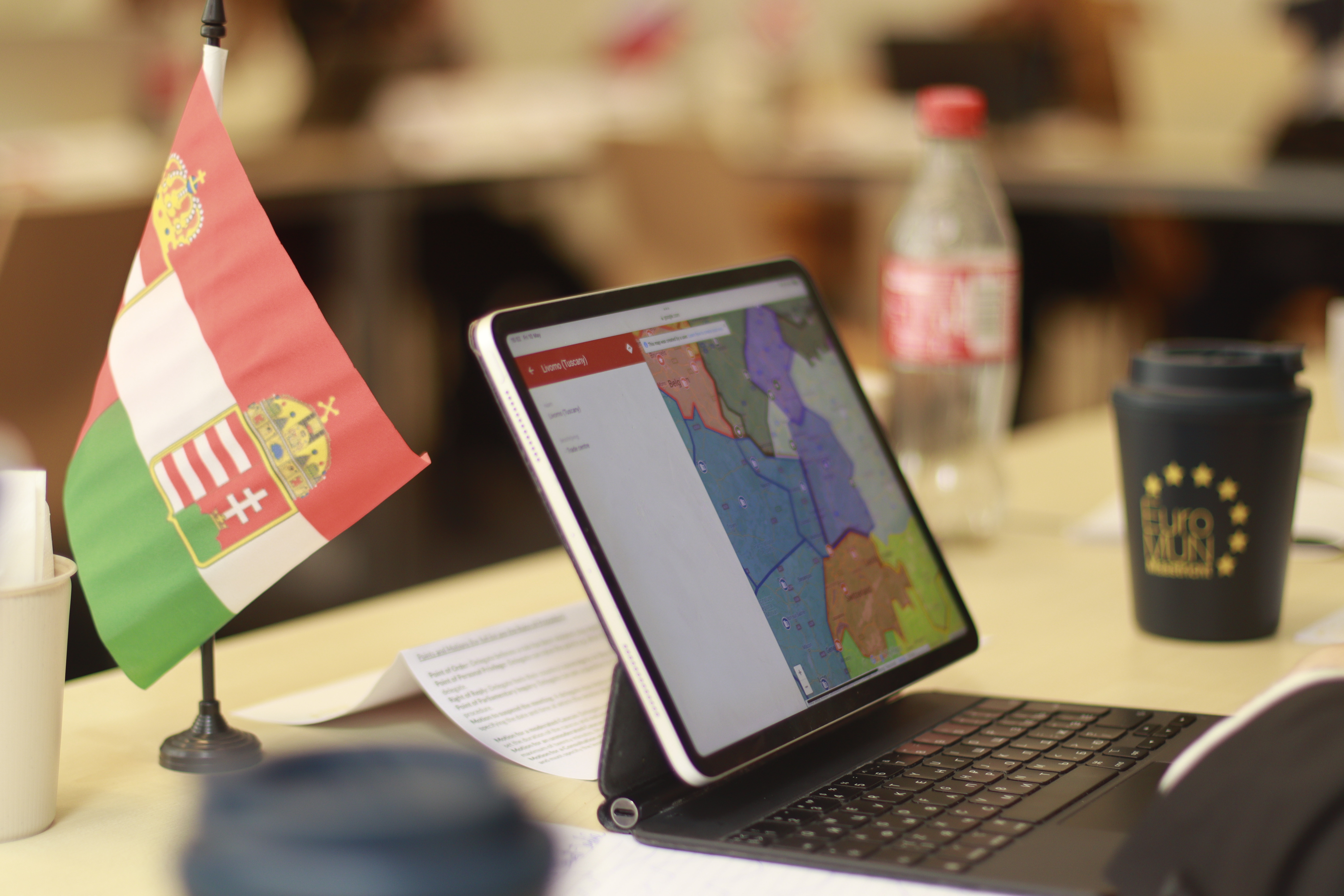
As it was my first crisis and since I was representing the in this conflict historically neutral Prussia, I took a quick look at the interactive Google Maps overlay and began to construct more railroads, further the economic development of the Ruhr and Upper Silesia and found a newspaper that could slowly build a German identity in order to create a sense of unity between the Germans of the various states. I had the luck that my co delegate, the war minister of Prussia, was not really interested in intriguing against me and we could soon see we had a common goal in mind: Unifying the German people under the leadership of His Majesty, King Frederick William of Prussia.
One thing I learned really quickly was that when writing directives, you cannot just write “send spies to Paris” but rather have to somewhat set it up by getting creative. You could for example do the above by establishing a high society night club funded by the Prussian foreign ministry and making it popular by sending young Prussian businessmen there, ultimately getting the upper echelons of Parisian society into the club and obtaining state secrets of these high ranking guests under the influence of alcohol and “special services”. Could be something someone could possibly try. Just as an example. The thing about crisis is that such ideas are highly popular in the backroom and that you might get a reply telling you that the directive got approved and the “establishment” is even turning a profit.
While mysterious rumours about the high life of Prussian businessmen were filling the boulevard papers of Paris, the Concert of Europe became more cacophonous every day as tensions rose: What was supposed to be the Crimean War, turned – because of pretty wild alliances – into a weird team up of all European powers against Russia really fast. What seemed a useless danger for Prussian lives at first, suddenly turned into an opportunity: In the midst of a heated simulated meeting with the German princes (impersonated by the backroom) about their support for Prussia in a case of war with Denmark over Schleswig and Holstein, we got interrupted by the news that France and Italy, while at war with Russia, had also attacked Austria over the Austrian holdings in Italy and Austria proper. This triggered the defensive clause of the German Federation. As we had invested valuable taxpayer money in order that the “neutral” newspaper Germania styled Prussia as the protector of all Germans, we had no chance but to help the Austrians defend against foreign intervention. With this the fate turned against France and Italy while the UK broke out into a civil war over the absolutist aspirations of Her Majesty Queen Victoria.
By this point we had done more than rewrite history: In this timeline the threat of the Royal Navy of an exiled Victoria bombing Copenhagen for a third time and invasion by the Prussians, freed the Germans of Schleswig and Holstein from the Danish yoke. Paris and Turin were surprised by the Prussian loyalty to Austria and couldn’t stop a highly biased newspaper, the best railroad network in Europe, the so excellently reorganised Prussian army by my fellow co-delegate in delivering the inevitable humiliation of French military pride. Emperor Napoleon III was assassinated by the Russians (?) with a gun hidden in a foto camera and so couldn’t witness the unification of Germany by 1856.
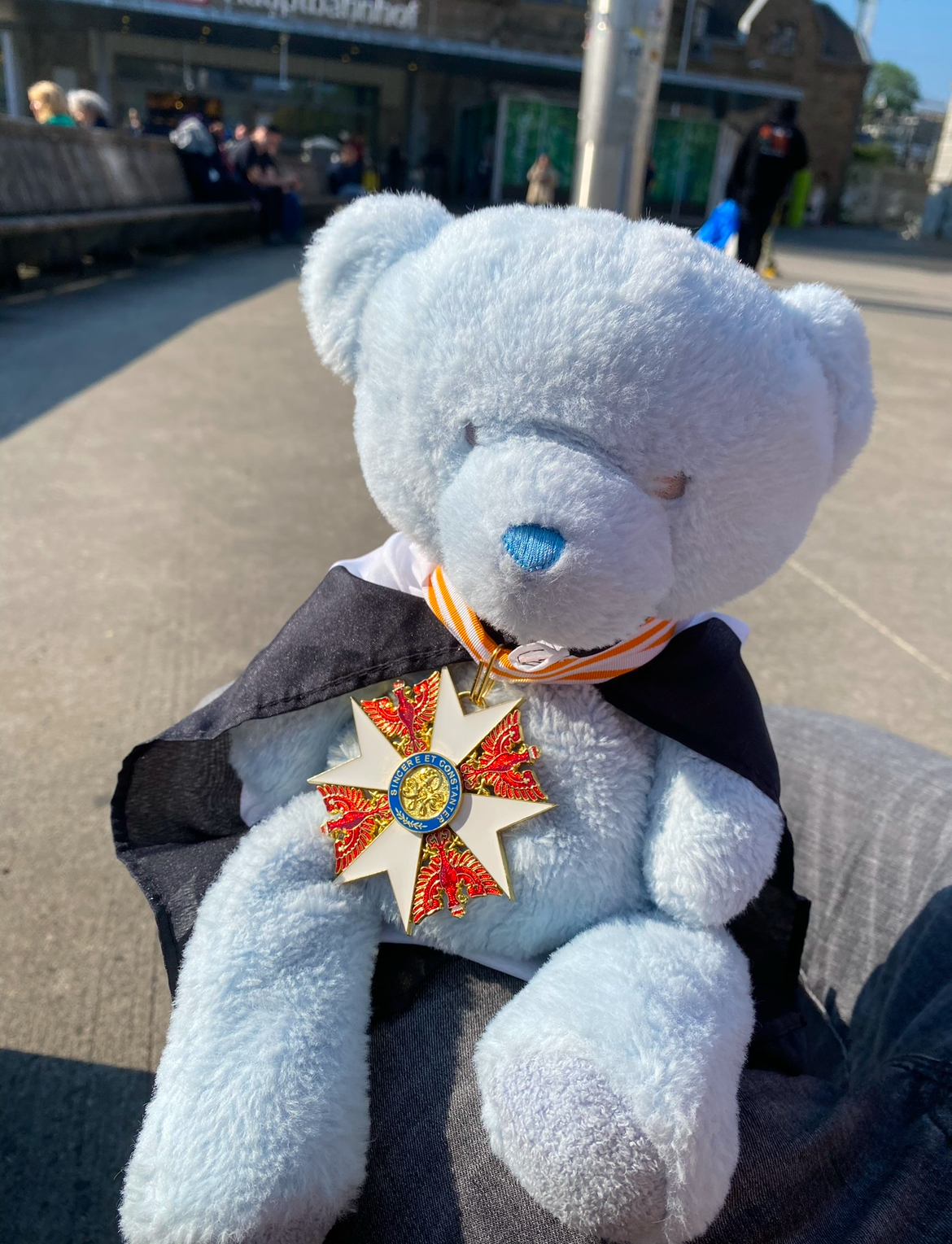
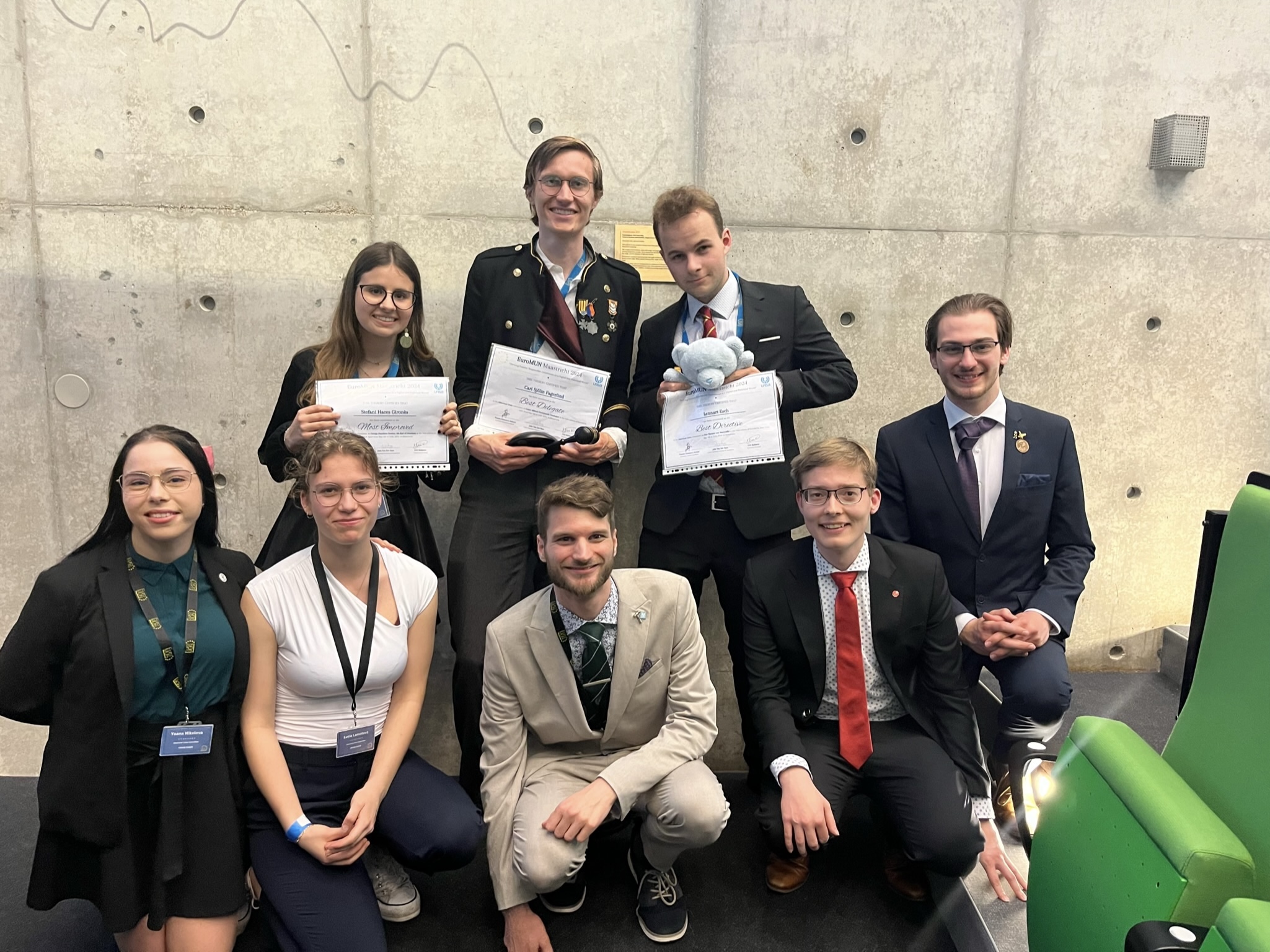
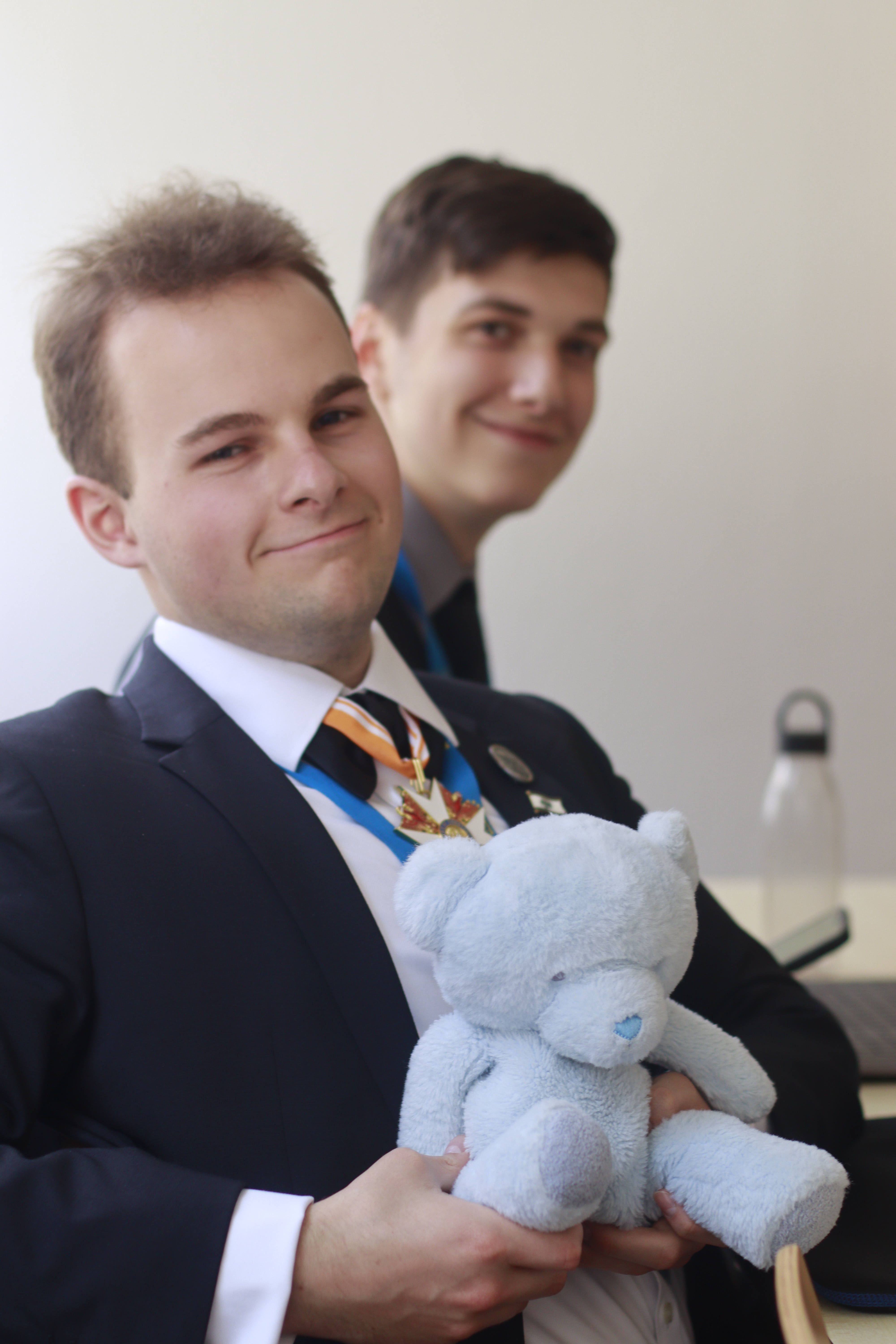
Sadly the crisis ended here but I am quite honoured, that His Majesty King Friedrich Wilhelm (and the backroom) deemed the part I played in this, noteworthy enough to bestow upon me the award of “Best Directives”. It will be put right next to my Order of the Red Eagle…
For those that didn’t stop reading by now and are not bored by geopolitics and intrigues of the 19th-century (or other more obscure times), I highly recommend trying out a Crisis committee once. You will notice the moment you set foot into the room that people in there are different:
At least at the EuroMUN it became a saying that “crisis never stops” because you couldn’t eat your meal, drink a coffee or do anything on the socials without people approaching you with “Manteuffel, I need to talk to you about Schleswig” or offering you parts of Austria for a Prussian-funded railroad expansion through the Balkans.
This together with the sometimes intense costumes are probably the reason why it is part of the experience that other committees at the conference think the crisis committee is weird. We however see it as natural and a matter of respect to address our co-delegates on the social with “Your Majesty” or “Count Cavour” rather than their real name.
I think you can feel that I adore this part of MUN so it should be no surprise that I highly recommend you to try out a crisis committee at least once in your MUN career.
At last there is one crucial thing I have learned at the EuroMUN: History maybe doesn’t repeat itself, but it rhymes. So who knows – maybe there could be a crisis committee in Heidelberg again after all these years?


 Heidelberg Model United Nations Society e.V.
You must be logged in to post a comment.